Quinn Richter · 2 October 2026
The Interplay of Archived Domain Records and Targeted Ad Placement Algorithms for Independent Operators
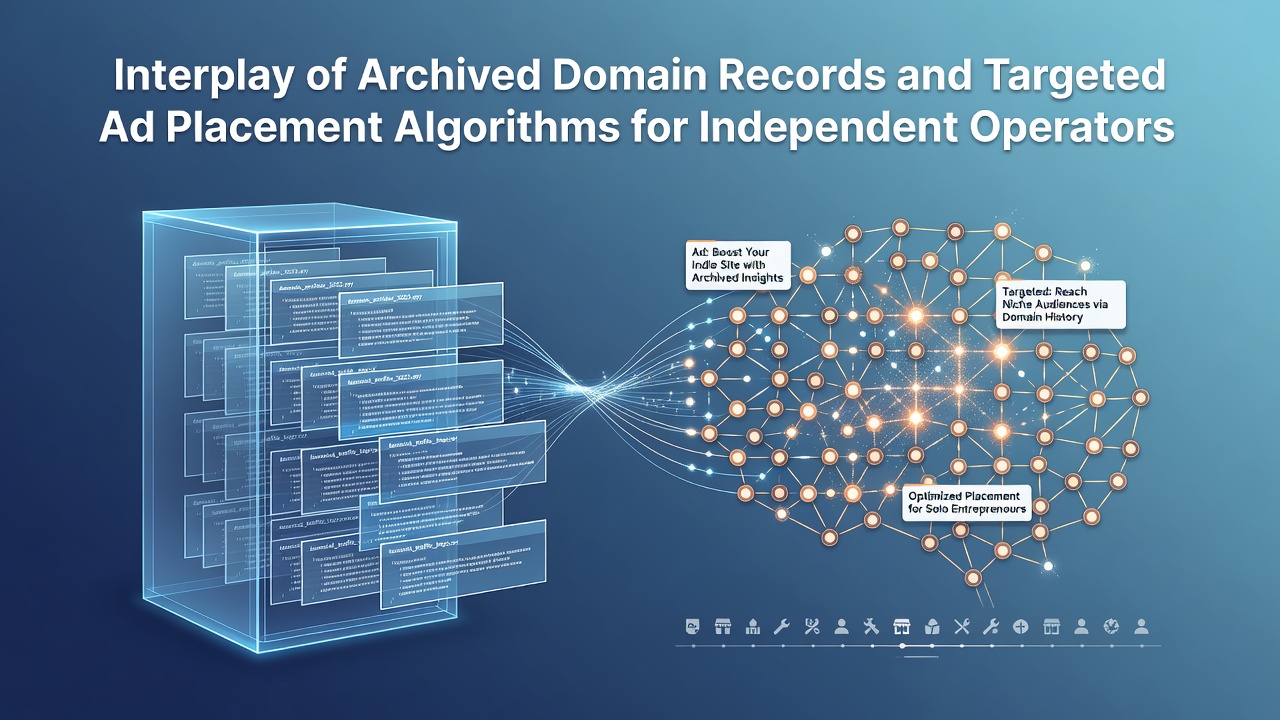
Archived domain records contain historical data on ownership changes, registration dates, and prior uses that ad placement systems access through multiple data brokers and public archives. Independent operators who manage smaller sites often encounter these records when ad networks evaluate domain quality and relevance scores. The process begins with WHOIS databases and Wayback Machine snapshots feeding into algorithmic models that match sites to advertiser categories based on past content themes rather than current pages alone. Operators notice this connection when a newly acquired domain triggers ad categories tied to its previous custodian, even after complete content replacement. Data brokers aggregate these records with browsing behavior signals to refine placement bids, which means independent sites receive inventory decisions influenced by timelines stretching back years. Research from the Internet Corporation for Assigned Names and Numbers shows that historical registration patterns account for measurable portions of domain reputation scores used in automated systems.How Archived Records Enter Ad Decision Pipelines
Ad algorithms pull from public archives and commercial datasets that compile registration histories, name server changes, and content snapshots. Independent operators find their placements shaped by these inputs when networks calculate risk profiles or topical alignment. A domain that hosted unrelated material five years earlier can still carry residual signals if the archive trail remains accessible to data providers.
Those who study ad tech pipelines observe that machine learning models trained on historical domain datasets treat archived content as a proxy for future performance. This approach allows networks to assign categories quickly without waiting for new traffic patterns to emerge. Independent operators who rebuild sites after acquisition often see initial ad fills reflect older themes until fresh user data accumulates over several months.
Algorithmic Matching and Domain History Signals
Targeted placement relies on feature vectors that include domain age, ownership transfers, and archived page text. These vectors help algorithms predict click-through rates and conversion potential for specific advertiser verticals. Independent operators see this in practice when ad creative for one niche appears on a site now focused on another topic because legacy signals outweigh newer ones in early scoring rounds.

Studies from academic institutions such as the University of Cambridge indicate that historical domain features improve model accuracy for certain ad categories by 12 to 18 percent in controlled tests. The models weigh these features alongside real-time metrics, yet the archived component remains fixed until operators actively request data suppression through available channels. As of October 2026, several major ad exchanges continue to incorporate public archive feeds despite ongoing privacy framework updates in multiple regions.
Practical Effects on Independent Site Operations
Independent operators manage these dynamics by monitoring domain history before purchase and submitting updated site information to ad partners. Some networks provide tools to flag content changes, which can accelerate the shift away from legacy categories. Others rely on traffic volume thresholds before re-evaluating placements, leaving smaller sites exposed to mismatched inventory for longer periods.
Figures from the Canadian Internet Registration Authority reveal that domains with multiple prior owners show higher variance in ad fill rates during the first year under new management. Operators who track these patterns adjust their content calendars and keyword strategies to generate counter-signals that algorithms can detect more rapidly. This adjustment process requires consistent data collection on which ad categories appear and how they correlate with archived records.
Regulatory and Technical Considerations
Privacy regulations in the European Union and Australia require certain data providers to honor deletion requests for historical records, yet enforcement varies across archive services. Independent operators who operate across borders must navigate differing rules on how long registration data remains linked to current site activity. Technical standards developed by the Internet Engineering Task Force support optional redaction fields in registration responses, though adoption among registrars remains uneven.
Those who examine ad ecosystem documentation note that some exchanges now offer optional filters to exclude archived signals during bidding. Independent operators who test these settings report shifts in category distribution, though results depend on overall traffic quality and advertiser demand in each vertical. The interplay continues to evolve as new data sources and compliance requirements emerge.
Conclusion
Archived domain records and targeted ad algorithms intersect through data pipelines that independent operators must account for when managing placements. Historical signals influence initial category assignments and can persist until sufficient new traffic data overrides them. Operators who understand these mechanisms can take steps such as pre-purchase history checks, proactive data submissions, and selective use of exclusion filters to align ad inventory more closely with current site focus. The relationship between past domain activity and present placement decisions remains a measurable factor in automated systems across multiple ad networks.