Rafael Koch · 30 October 2026
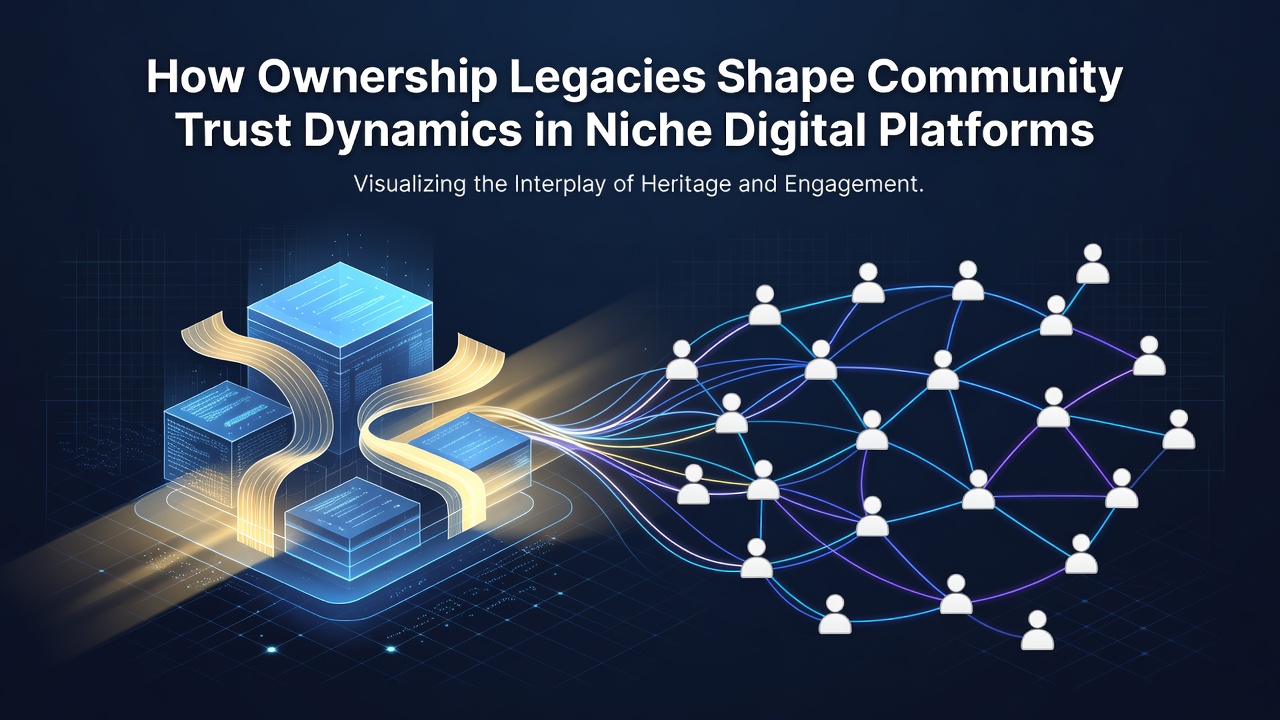
How Ownership Legacies Shape Community Trust Dynamics in Niche Digital Platforms
Ownership changes in niche digital platforms create lasting effects on how user groups evaluate continuity and reliability, with archival records of prior custodians often informing current participation patterns. Data from platform analytics firms shows that communities frequently reference historical ownership details when assessing whether a site will maintain its original focus or user protections. Researchers tracking forums and specialized networks have documented cases where shifts in control led to measurable drops in engagement within the first six months after a transfer.
Historical Ownership Records and Their Role in Trust Assessment
Platform users routinely consult archived WHOIS data and public transaction histories to trace previous operators, and studies indicate this practice influences decisions to remain active or migrate elsewhere. In October 2026, reports from digital infrastructure observers noted increased queries to domain registries following several high-profile niche site acquisitions, reflecting a broader pattern where legacy information serves as a proxy for future stability. Those who monitor community forums observe that members cross-reference old moderation policies against new announcements to identify potential divergences in approach.
Patterns in Specialized Online Groups
Specialized platforms such as hobbyist discussion boards and professional resource networks demonstrate distinct responses to ownership legacies, with data showing faster trust erosion when new operators lack ties to the original founding team. Evidence from longitudinal tracking of user activity reveals that groups with documented prior ownership by established entities retain higher retention rates even after transfers, whereas platforms with opaque histories experience slower recovery in participation metrics. Observers note that these dynamics appear across gaming communities, academic exchange sites, and regional interest forums alike.
Mechanisms Linking Past Custodianship to Current Dynamics
Community trust often builds through visible continuity in data handling practices and moderation standards that echo earlier regimes, and figures from industry reports confirm correlations between archived policy documents and sustained user loyalty. When new owners publish transparency logs referencing previous frameworks, engagement metrics tend to stabilize more quickly according to analytics shared by platform operators. Researchers have identified that users in niche spaces frequently form informal networks to share ownership timelines, creating collective memory that shapes responses to updates or feature changes.
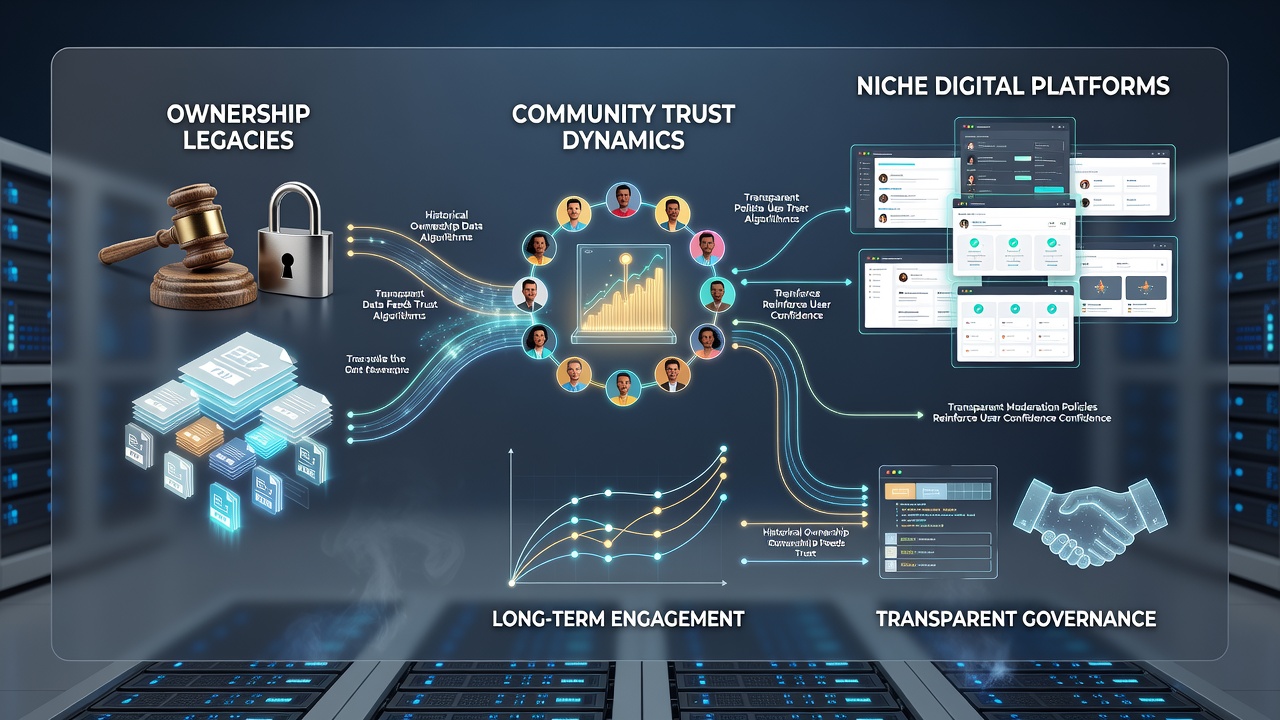
But here's the thing: platforms that maintain public changelogs tied to earlier ownership periods see steadier interaction levels, while abrupt resets without reference to historical context correlate with higher churn. Data collected across multiple regions indicates this pattern holds in both volunteer-run and commercially operated spaces.
Evidence from Platform Transitions and User Behavior
Academic analyses of digital community evolution have examined cases where ownership moved between entities with differing geographic bases, revealing that users weigh the new custodian's regional regulatory environment against prior practices. A report from the European Commission on online platform governance highlights how legacy data influences compliance perceptions in specialized networks. Similarly, research compiled by the Australian Competition and Consumer Commission tracks how ownership histories affect user confidence metrics in localized digital marketplaces and forums.
Those studying these shifts find that communities with access to detailed ownership timelines demonstrate more predictable responses to policy adjustments, including quicker alignment with updated terms. In contrast, platforms lacking accessible historical context often require extended periods to rebuild interaction volumes after changes in control.
Long-Term Effects on Niche Platform Ecosystems
Over extended periods, ownership legacies contribute to the formation of sub-communities that prioritize platforms with transparent transition records, and platform usage statistics support this segmentation. Observers tracking activity in October 2026 recorded sustained migration patterns toward sites that publish detailed ownership timelines alongside operational updates. These movements occur alongside broader trends in which users leverage public archives to anticipate shifts in monetization approaches or data retention standards.
Evidence suggests that platforms incorporating references to prior custodians in their governance documentation experience slower but more durable trust accumulation compared with those that present as entirely new entities. Researchers continue to map these relationships through aggregated engagement data across hobby, professional, and interest-based networks.
Conclusion
Ownership legacies continue to function as foundational elements in how niche digital platform communities evaluate ongoing viability and alignment with established norms. Available records and behavioral data demonstrate consistent links between historical custodianship details and contemporary participation levels, with transitions handled through reference to past frameworks showing stronger continuity outcomes. As platforms evolve, the role of archived ownership information remains a measurable factor in trust maintenance across specialized online environments.